
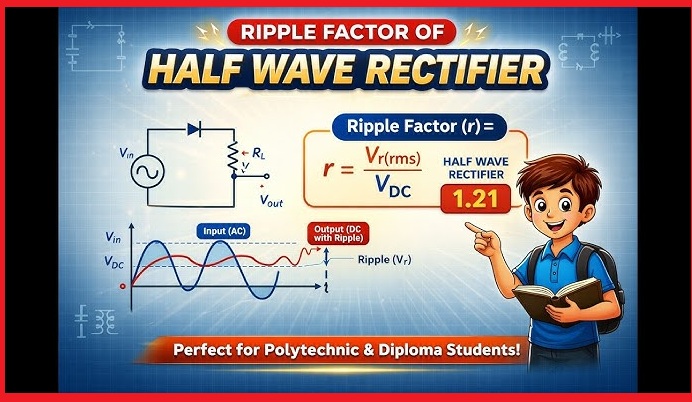
Ripple component is one of the most crucial concepts in electronics and electrical engineering. It is normally used to diploma the first rate of the DC output produced with the beneficial resource of a rectifier. Even after changing alternating current (AC) into direct current (DC), the output is not perfectly smooth. Small undesirable AC fluctuations stay inside the output voltage, and people fluctuations are called ripples.
The ripple detail allows determining how a exceptional deal AC ripple is present in the DC output. A dlowerripple issue method a smoother and more stable DC supply; it’s critical for powering digital devices thoroughly and efficiently.
What Is Ripple Factor?
Ripple issue is the ratio of the RMS (Root Mean Square) value of the AC detail present inside the rectifier output to the DC value of the output voltage or present day.
It shows the amount of undesirable AC ripple present inside the DC output after rectification.
A smaller ripple aspect way the output is closer to natural DC, whilst a higher ripple issue shows greater AC fluctuations.
Ripple Factor Formula
The ripple factor is calculated using the following formula:
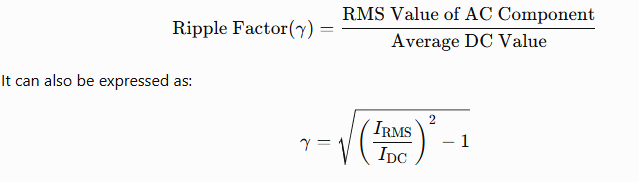
Where:
- γ = Ripple Factor
- IRMS = RMS value of the output current
- IDC = Average DC
The ripple factor has no unit because it is a ratio.
Why Is Ripple Factor Important?
Ripple issue is an important parameter because it measures the quality of a DC power supply.
A low ripple factor offers:
- Stable voltage
- Better overall performance of electronic circuits
- Reduced electrical noise
- Longer device lifestyles
- Improved performance
A high ripple factor might cause unstable circuit operation and overheating of sensitive components.
How Does Ripple Occur?
When an AC signal passes through a rectifier:
- AC voltage enters the rectifier.
- The rectifier converts AC into pulsating DC.
- The output contains small AC variations.
- Filters reduce those ripples.
- The closing AC waveform determines the ripple element.
Without filters, the output of a rectifier incorporates large ripple.
Ripple Factor of Different Rectifiers
Different rectifiers have specific ripple elements.
| Rectifier Type | Ripple Factor |
|---|---|
| Half-Wave Rectifier | 1.21 |
| Full-Wave Rectifier | 0.482 |
| Bridge Rectifier | 0.482 |
| Filtered Rectifier | Very Low (depends on the filter design) |
From the desk, the full-wave and bridge rectifiers produce smoother DC output than a half-wave rectifier.
Example of Ripple Factor
Suppose a rectifier has:
- RMS modern = 5 A
- Average DC = 4.5 A
Using the components:
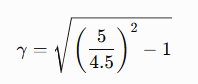
The calculated ripple factor is approximately 0.484, indicating a notably smooth DC output.
Factors Affecting Ripple Factor
Several factors have an impact on the ripple component.
Type of Rectifier
Half-wave rectifiers produce higher ripple than full-wave rectifiers.
Filter Circuit
Adding a capacitor, inductor, or LC filters drastically reduces ripple.
Load Resistance
Different load situations have an effect on the amount of ripple inside the output.
Input Frequency
Higher frequencies typically make ripple filtering much less complicated.
Capacitor Value
Larger filter-out capacitors hold a higher price and reduce ripple more efficiently.
Methods to Reduce Ripple Factor
Ripple may be minimized by using filtering circuits.
Capacitor Filter
A capacitor charges while the voltage rises and discharges while it falls, smoothing the output voltage.
Inductor Filter
Inductors oppose sudden modern-day adjustments, lowering ripple.
LC Filter
Combines an inductor and capacitor for higher filtering.
Pi (π) Filter
A π filter uses capacitors and an inductor to provide extraordinary ripple reduction.
Voltage Regulator
Voltage regulators cast off maximum remaining ripple and provide a stable DC output.
Advantages of Low Ripple Factor
A lower ripple factor gives many benefits.
Stable DC Output
Electronic gadgets receive a regular voltage.
Improved Circuit Performance
Sensitive digital components work more reliably.
Longer Equipment Life
Reduced electrical pressure extends the lifespan of components.
Better Audio Quality
Audio amplifiers produce an entire lot less buzzing noise.
Increased Efficiency
Power assets operate more effectively with smoother DC output.
Disadvantages of High Ripple Factor
A high ripple factor can cause numerous problems.
- Voltage fluctuations
- Noise in digital circuits
- Poor tool traditional overall performance
- Heating of electronic components
- Reduced performance
- Shorter element lifespan
Therefore, designers normally aim to lower ripple in power supplies.
Applications of Ripple Factor
Ripple trouble is a critical concern in plenty of digital systems.
Power Supply Design
Engineers use ripple factor to evaluate DC power components.
Battery Chargers
Low ripple ensures secure and efficient battery charging.
Audio Amplifiers
Reduced ripple minimizes unwanted hum and noise.
Communication Equipment
Stable DC electricity improves sign wonderful.
Medical Devices
Sensitive medical equipment calls for low-ripple power supplies.
Computer Systems
Power components with low ripple assist guard processors, memory, and storage gadgets.
Industrial Electronics
Control systems and automation tools rely on easy DC voltage for dependable operation.
Ripple Factor vs Efficiency
| Feature | Ripple Factor | Efficiency |
|---|---|---|
| Measures | Quality of DC output | Power conversion performance |
| Unit | No unit | Percentage (%) |
| Lower Value | Better | Not applicable |
| Higher Value | Worse | Better |
A specific power delivery normally desires low ripple and excellent general performance.
Importance of Filters in Reducing Ripple
Filters play an essential role after the rectifier stage.
Their competencies include:
- Reducing AC components
- Producing smoother DC voltage
- Improving strength stability
- Protecting digital gadgets
- Increasing average tool reliability
Without filters, most digital gadgets could not perform well.
Real-Life Examples of Ripple Factor
Ripple component is essential in normal digital gadgets, including
- Mobile phone chargers
- Laptop adapters
- LED drivers
- Television power substances
- Desktop laptop SMPS
- Solar power structures
- UPS systems
- Laboratory electricity substances
All these gadgets use filtering techniques to reduce ripple and deliver stable DC power.
Conclusion
Ripple factor is a key parameter used to measure the amount of AC ripple present within the DC output of a rectifier. It enables engineers take a look at the quality of a power supply and format circuits that deliver smooth, reliable DC voltage. A lower ripple factor indicates higher filtering and improved overall performance, making it essential for applications ranging from battery chargers and audio amplifiers to computers and clinical devices.
Understanding ripple factor, its system, influencing factors, and techniques of good design offers a sturdy basis for all and sundry analyzing electronics or working with power supply circuits.
Frequently Asked Questions
1. What is ripple factor
Ripple factor is the ratio of the RMS voltage of the AC signal to the average DC voltage in a rectifier’s output.
2. What is the unit of ripple factor
Ripple factor has no unit because of the fact it’s a ratio.
3. What is the ripple issue of a half of of-wave rectifier?
The ripple factor of a half-wave rectifier is approximately 1.21.
4. What is the ripple detail of a full-wave rectifier?
The ripple factor of a full-wave rectifier is approximately 0.482.
5. How can the ripple component be reduced?
Ripple factor can be reduced by using capacitor filters, inductor filters, LC filters, π filters, and voltage regulators.
6. Why is a low ripple factor critical?
A low ripple factor presents smoother DC output, improves circuit overall performance, reduces electrical noise, and increases the reliability and lifespan of digital devices.